


AI without mystery
Knowing how AI works, how to ask clearly and where it goes wrong.
- Understand the logic in plain words
- Give context so the answer makes sense
- See what changes from one tool to another
AI mentorship
Understand the basics of how AI works, find where it can change your work and carry on with autonomy.
Explore the mentorshipNew tools appear every week, and it is easy to be swallowed by them. What lasts is knowing how to think: what AI does well, where it fails and which of all that you need right now.
Many people use AI by opening a chat and asking for a text here, a summary there, without being able to say what actually changed. At the same time, something new arrives every week, and it feels as if you are always behind. Most of the time, what is missing is not a better tool: it is a way of looking at your own work and choosing, with critical thinking, what is worth it right now.
That is what we do together. We start with the basic concepts, look at your real routine and think through what you need. From there, we see possible paths and you try them in your daily work, with support. Autonomy comes with time, session after session, until you carry on without needing me.
Three capabilities that still hold when the tools change.
Knowing how AI works, how to ask clearly and where it goes wrong.
Choosing, among everything new, what your work needs right now.
Gaining the confidence to create and adjust your own solutions.
Four movements that repeat and blend throughout the sessions, always starting from what you bring.
We start with the concepts that make a difference: how AI works, what it does well and where it tends to fail. No jargon and no ready-made formula.
Together we look at your work: what you do, what weighs on you and what you would like to change. The right question comes before the tool.
With a shared screen, we sketch possibilities and try ideas on your own files and projects. Curation is part of this: among everything that exists, we choose what you need right now, and the rest can wait.
You experiment in your daily work and bring back what happened. We adjust together whatever is needed, until you can carry on without constant guidance.
The mentorship can be one-to-one or in a trio. In both cases, the path follows the needs of the people taking part.
One-to-one or in a trio
You can do the mentorship on your own or in a closed group of up to three people, organised in cycles. In the trio, each person brings their own need, and everyone learns from what the others discover.
Live and online
Sessions take place over video call, with a shared screen whenever it helps us think and test together.
No coding needed
You do not need a technical background. The concepts are explained from the start, in plain language.
Agreed pace
The number of sessions and the time between them are agreed with you, according to what you want to work on.
Portuguese or English
Sessions can be held in whichever language you feel most comfortable in.
People who do almost everything themselves and want to understand where AI could lighten the operational side of their work.
People who need to decide where it is worth investing time and money in technology, without depending on a specialist at every step.
People who spend hours a week formatting documents, gathering scattered information or repeating the same tasks.
People who want to look at AI calmly, understand the risks and choose carefully what makes sense for them.
You do not need to understand technology. You need to bring your work into the conversation.
This is not consulting that hands you a finished system you cannot maintain, nor a tour of tools. It is mentorship: we think and build together so that the understanding stays with you.
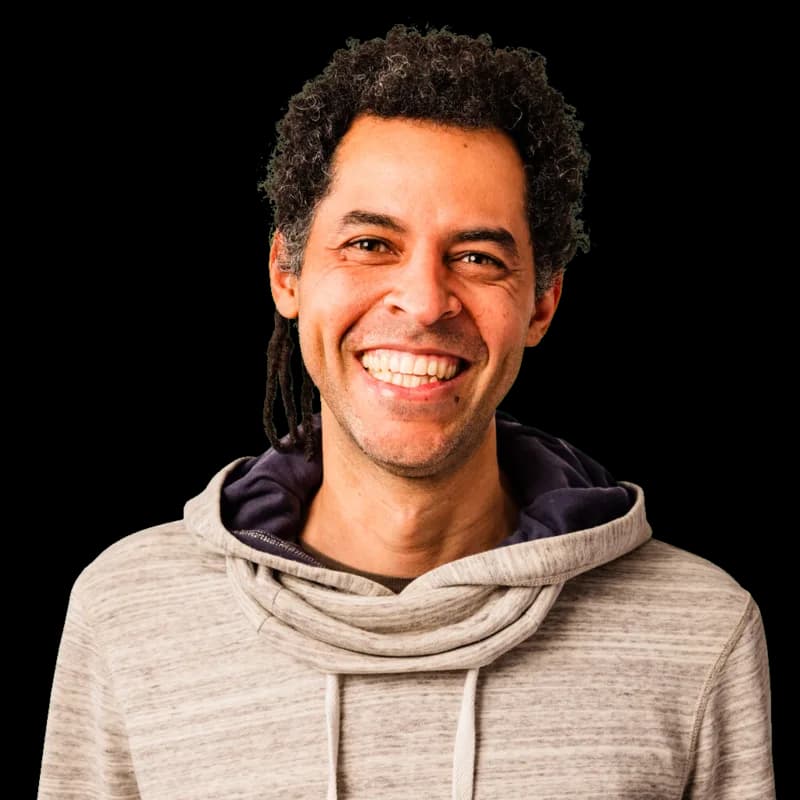
Who leads it
For more than 20 years I have worked across people, processes and technology. I started in logistics, redesigning processes at a multinational, and then founded Colibrí with Laura, where I built the operation that sustained the company for years with a lean team.
Today I use AI every day and build tools and automations with it, for organisations and for my own projects. I also accompany people in Brazil and Europe who want to bring AI into their own work.
I have studied psychology and group dynamics for more than ten years. That matters here: adopting AI means changing a way of thinking and working, and that change goes through people, at each person's pace.
No. We start from where you are, and the logic of AI is explained with examples from your daily work, without complicated terms.
That is fine. Finding out is part of the mentorship. We look at your routine together and see where AI can help and where it is not worth the effort.
That is the direction. Because we think and test together across the sessions, you gradually gain the confidence to adjust and create new workflows on your own. The pace is each person's.
Taking care of data is part of the mentorship from the start: which tools respect privacy, how to stop your data from being used to train models and what should never be shared.
We agree on it at the start, according to what you want to work on. Usually we set up a cycle of sessions with enough time in between for you to try things in your daily work.
The trio is a closed group of up to three people who walk together through a cycle. Each person brings their own need, and what one discovers often opens a path for the others. It is not an open cohort or team training.
New tools appear every week. Knowing where they fit in your work keeps its value.
Tell me about your work and what you would like to understand better about AI. From there, we see together whether the mentorship makes sense and which format suits you.